2026
-
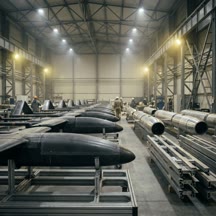
PLA Modernisation Seen Through US Munitions and Cyber Gaps
Two September 2026 reports take the measure of PLA modernisation from the outside in. CNAS's Philip Sheers and Stacie Pettyjohn argue that cheap drones and cruise missiles should supplement rather than replace high-end munitions in a Taiwan fight, saturating air defences and attriting an invasion fleet but leaving hardened and deep-inland targets untouched; CFR's Matthew Ferren, Adam Segal and Rush Doshi describe a widening cyber asymmetry in which Chinese state-sponsored operations threaten the systems Washington needs to fight and govern. We read both for what they assume about PLA force structure and capability, and note how much of the analysis is framed as US shortfall rather than direct assessment of China's own programmes and defence industrial base.
-

Deal or Defence: Europe Reads China's Economic Security Turn
Two reports published two days apart put the same question from opposite ends. MERICS maps Beijing's shift from defending its economic interests to an offensive posture — the institutions, the legal and extralegal instruments, and the 'promote, protect, partner, punish' toolbox — before turning to what Europe should do about it. The German Marshall Fund's Gunnar Wiegand picks up there, laying out Brussels' choice between a substantive trade settlement and unilateral defensive measures, and arguing that talks only work if the EU pairs resolve with instruments it is actually willing to use.
-
Chokepoints, AI Rules and AGI: Three Reports on Tech Leverage
Three Western think-tank reports from the past month approach the U.S.-China technology contest from different angles: CFR's Joris Teer argues that supply-chain diversification alone cannot blunt Beijing's coercive leverage and calls for allied demand-side tariffs, procurement rules and joint economic deterrence; CSIS's Christopher Collins and Aalok Mehta map an institutional race over AI governance in which Washington lacks an exportable domestic framework while Beijing packages state-friendly rules, open model access and a proposed world AI cooperation organisation; and CNAS's Jacob Stokes stipulates imminent AGI and asks what would actually convert a technological lead into geopolitical power. We read all three closely, compare their assumptions about where leverage comes from, and ask where the evidence is thin.
-
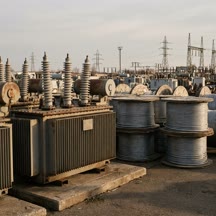
Who Funds the Factory: Beijing's Credit Machine vs. Import Controls
Two reports from opposite ends of the policy pipeline land on the same problem: Zongyuan Zoe Liu's China Leadership Monitor essay for Hoover traces how Beijing rebuilt its financial system after 2020 around technological self-reliance, steering banks and investors toward innovation risk while the Party-state keeps control of where capital lands. Craig Singleton's congressional testimony for FDD argues Washington has spent that same period denying China access to U.S. capability while Chinese firms took durable positions in U.S.-bound supply chains for batteries, semiconductors, robotics and power systems. We read the financing machinery and the proposed import-control remedy against each other, and ask what each account leaves out about the other's side of the ledger.
-

China's AI Strategy and the Middle-Power Squeeze
Two September 2026 think-tank reports read China's AI push from opposite ends. Bruegel's García-Herrero and Storella argue that Beijing's seemingly contradictory posture — walling off the domestic market while pushing its models abroad, chasing self-reliance while championing global governance — is one coordinated state strategy, backed by a $47.5 billion semiconductor fund, an $8.2 billion national AI fund and municipal compute subsidies. Brookings' Douglas Rediker starts from the other side, asking what Europe, Japan and South Korea can still bargain with when competing on price or scale against a country holding 54 percent of world industrial-robot installations is a lost cause; we weigh both against each other and against the evidence they cite.
-

Taiwan’s Security Beyond the Cross-Strait Force Balance
Two recent reports assess Taiwan’s security through societal resilience, gray-zone coercion, defense partnerships, and regional deterrence. This episode examines how their broader frameworks complement—but do not replace—a direct accounting of the cross-strait military balance.
-

How Beijing Governs AI, Diaspora Networks, and Retirement
Three reports examine how the Party-state advances development while tightening political coordination and control. They connect tiered AI regulation, standardized overseas Chinese affairs, and retirement reform to Beijing’s technology, national-security, and 2035 modernization priorities.
-

Who pays? China's surplus, its currency and its debt
Four analysts look at the same Chinese imbalance and blame different things: an undervalued currency, a collapsed housing market, decades of financial repression that quietly billed households, and a capital-control regime now being extended to individual savers. They disagree sharply about the mechanism and about what a correction would actually require. We weigh the evidence behind each account and ask who ends up paying for the next round of losses.
-

China's battery and minerals grip: can the West loosen it?
China refines most of the world's critical minerals, builds most of its batteries and is now taking over third-country car markets outright. This episode weighs four recent studies on how deep that grip really goes — and tests the counter-moves on offer, from allied industrial partnerships to host-country localisation rules to a fresh round of Section 301 tariffs. The reports agree on the scale of Chinese dominance and disagree sharply on whether anything currently being tried will dent it.
-

Axis or arrangement? China's alignments in the 2026 Indo-Pacific
Four weeks of Western think-tank writing have converged on one question: is the China-Russia-North Korea grouping a bloc, or a set of transactional bargains that keeps rearranging itself? We read a Lowy survey that says the alignment is real but leaderless, a CSIS report that says China-Russia military coordination is already an operational problem for Japan, a CSIS study of Beijing's reset with Pyongyang that shows the partners competing as much as cooperating, and two reports on what the other side is actually doing about it — Washington's munitions gap and Canberra's pragmatic hedge.
-
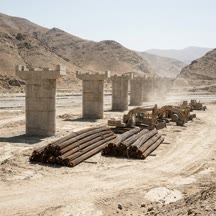
From lender to debt collector: China's Global South reset
China's development-finance machine has changed shape: the mega-loans have dried up, the money that remains is going into grants, minerals and extraction, and the countries on the receiving end are recalculating. We read a new Lowy Institute aid map of the Pacific, a Center for Global Development note on where Belt and Road money actually went, and two Carnegie papers on how the Middle East and India are managing Beijing. We also weigh how strong the evidence really is — and where these four disagree about whether China is retreating or just repositioning.
-

Compute, Code and Robots: Who Is Winning the AI Stack
Four recent think-tank reports disagree about where the US-China technology race is actually decided: in gigawatts and data-centre build speed, in the software layer above the chips, in China's robot factories, or in Europe's fractured response. We weigh the evidence each one brings, and note where the confident numbers thin out. This episode reaches back past our usual 30-day window, and two of the four reports come from the same institute.
-
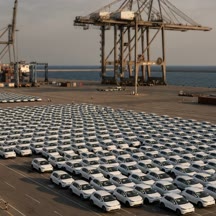
Chokepoints and Overcapacity: China's Industrial Grip in 2026
Five recent think-tank studies converge on the same question from different angles: how far China's manufacturing and supply-chain dominance now reaches, and whether anyone can respond to it. MERICS looks at the domestic fiscal constraints behind Beijing's 15th Five-Year Plan, Rhodium dissects the AI tech stack layer by layer, ECFR argues Europe should turn its own rules into leverage, and Lowy asks what Southeast Asia does when it is the ground the two blocs fight over. We weigh how strong the evidence actually is, and where the four sets of authors quietly disagree.
-

Who's Actually Ahead? New Reads on the PLA Balance
Five recent Western think-tank assessments of Chinese military power reach strikingly different conclusions about who holds the advantage. Brookings argues the US retains real edges in undersea warfare and logistics; the Lowy Institute says American primacy in the Indo-Pacific has already eroded; CSIS turns the vulnerability argument around on China's own carriers while documenting a commercial space sector outpacing US industrial output. We read them against each other and ask what the disagreement is actually about.